
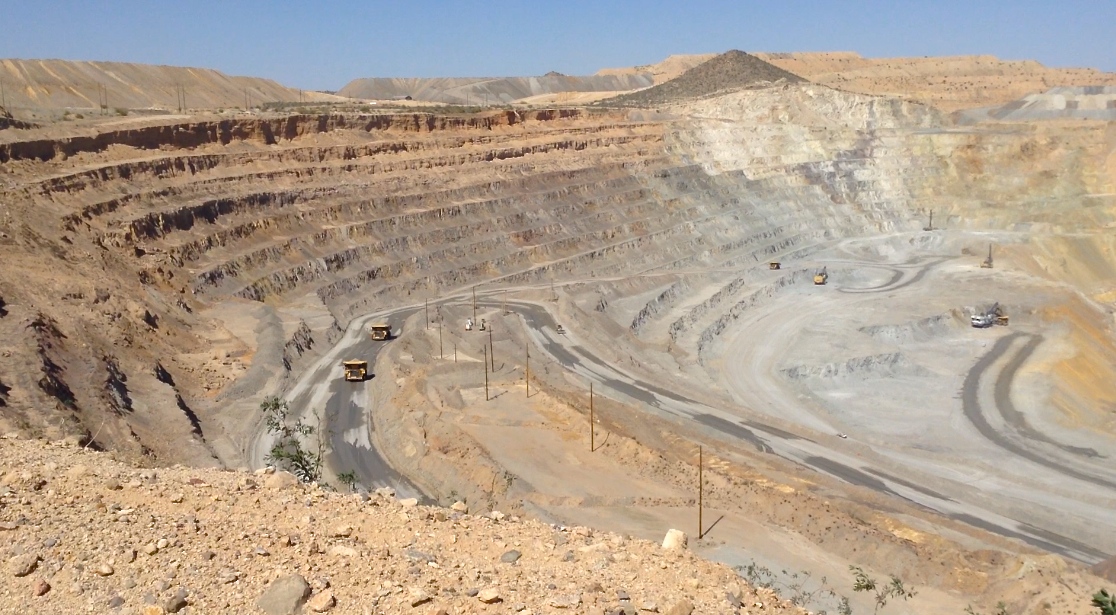
This is the founding thesis for the critical minerals vertical at Clean Power Press.
“Critical minerals” entered mainstream policy vocabulary in 2022 and has become one of the most overloaded terms in energy and national security discussions. Lithium, cobalt, nickel, rare earth elements, graphite, manganese — the list of materials deemed critical to clean energy and defense manufacturing is long, and the supply-chain vulnerabilities in that list are real. The policy response, however, is being misread in much of the coverage as a domestic reshoring story. It isn’t. It’s an ally-shoring story, and that distinction matters for understanding where the capital is actually going.
The reshoring illusion
True US-domestic critical mineral production faces a constraint that no amount of executive action resolves quickly: permitting timelines. The average time from initial mineral discovery to first production in the United States is 10–17 years. The mine permitting process under NEPA, the Clean Water Act, and state-level environmental review is among the most time-consuming in the world.
The Biden and Trump administrations both invoked the Defense Production Act to accelerate domestic mineral development. The DPA gives the DOE authority to make grants and loans for domestic production, bypassing some procurement rules. The Trump DPA executive order in March 2025 directed DOE to prioritize domestic sourcing for key minerals and authorized $1.5B+ in grants to domestic projects.
The grants are real. Some projects will be accelerated at the margins. But the permitting clock is not primarily a funding problem — it’s a regulatory timeline problem. A $50M DOE grant does not make an environmental impact statement process faster. The mine that begins the permitting process today will produce ore in the mid-2030s at the earliest.
Where the capital is actually going
The practical outcome of IRA sourcing requirements, DOE loan programs, and DOE/DLA mineral investments is not “more US mines.” It’s “more allied-nation mines with US capital and offtake agreements.” Look at the actual investment flows:
- Australia is the largest beneficiary. Pilbara lithium producers, rare earth projects at Northern Minerals and Arafura, and nickel projects in Western Australia have received significant US offtake and co-investment. Australia’s FIRB review structure is friendly to US capital in a way that Chinese capital now isn’t.
- Canada is the second major beneficiary. Piedmont Lithium’s Tennessee operation has Quebec concentrate supply locked in. Standard Lithium’s Arkansas brine project has Lanxess as a partner. Several NWT rare earth projects have DOD interest.
- The Philippines hosts large nickel laterite deposits. US engagement with Philippine nickel has increased as Indonesia (the world’s dominant nickel producer) has moved to downstream-processing-only export rules.
- Morocco and South Africa are in discussion for rare earth and battery-metal supply for the European and US markets.
The IRA’s “foreign entity of concern” (FEOC) rules, which phase in requirements that EV batteries not use minerals sourced from China, Russia, North Korea, or Iran, are the structural forcing function for this shift. By 2027, FEOC compliance is required for vehicles to claim the full $7,500 EV tax credit. Manufacturers are building supply chains accordingly, and those supply chains run through allied nations, not US mines.
The refining gap is the real problem
Mining gets the political attention — “American mines for American batteries” is a better bumper sticker than “American hydroxide converters for American batteries.” But the actual chokepoint in the critical mineral supply chain is refining, not mining.
China controls approximately:
- 60-70% of global lithium refining capacity (spodumene-to-hydroxide conversion)
- 80%+ of rare earth separation and refining capacity
- 70%+ of cobalt refining capacity (even as DRC is the dominant miner)
- Majority of graphite anode processing capacity
Raw ore from an Australian lithium mine currently routes through China for refining before returning as battery-grade hydroxide. The same is true for most rare earth concentrate from non-Chinese mines.
Building refining capacity outside China requires capital, technology, and time. The capital is starting to flow: the IRA’s Section 45X credits apply to advanced manufacturing including battery cell and component production; DOE ATVM loans have funded Lithium Americas’ Thacker Pass project which includes an integrated hydroxide facility; MP Materials received $58.5M in DOD funding specifically for separated rare earth oxide production at Mountain Pass (bypassing Chinese separation).
These investments are material but early-stage. Domestic and allied refining capacity outside China is growing from a small base. The 2030 refining landscape will look different from 2025; the 2027 landscape will not.
China’s strategic position
China’s decision in late 2024 to ban antimony exports and its ongoing management of rare earth export quotas reflect a deliberate strategic use of mineral supply-chain dominance. China controls these choke points and is willing to use them. The DRC cobalt ban in late 2025 — a Congolese government decision but one that served Chinese interests by disrupting non-Chinese cobalt supply — is another data point.
The realistic US response is not to replicate China’s position domestically. It’s to diversify the sourcing geography enough that no single point of disruption (country ban, mine failure, political crisis) causes a cascade. Allied-nation sourcing achieves that diversification without requiring the 10+ year domestic permitting timelines.
Antimony: the case study
Antimony is not lithium or cobalt — it doesn’t power an EV battery. But it illustrates the supply-chain vulnerability pattern precisely. Antimony is a critical input for military-grade ammunition, flame retardants, and some solar thin-film applications. China produces approximately 50% of global supply. China banned antimony exports in late 2024.
US domestic antimony production is minimal. There is one operating antimony mine in the US (United States Antimony Corporation in Montana) producing small volumes. The ban created immediate supply stress for defense procurement.
The policy response has been to accelerate sourcing from allied nations (Australia’s Perpetua Resources project received DOD funding in 2025) and to investigate strategic reserves. A mine in Idaho, Perpetua Resources’ Stibnite project, has received a DOD loan interest letter and is in permitting — timeline to production: 2028 at optimistic. The 3-year gap between ban and allied supply is the actual vulnerability window.
Positioning implications
- Allied-nation miners with US offtake or DOD backing have structural advantages. Perpetua (antimony, gold, US), Lynas (rare earths, Australia), Pilbara Minerals (lithium, Australia) are examples.
- US refiners or processors with domestic or allied-nation feed and IRA Section 45X eligibility have a structural margin advantage.
- MP Materials is the clearest “reshoring” play in rare earths — domestically mined, domestically separated, with DOD revenue backstop.
- Diversified mining majors (Rio Tinto, BHP) with allied-nation assets in battery metals are indirectly positioned.
Risks to the thesis
- Permitting reform actually passes in meaningful form, accelerating domestic timelines.
- Allied-nation political relationships deteriorate (US-Australia trade frictions, Philippines pivot) and supply agreements face renegotiation risk.
- A rapid transition to sodium-ion or manganese-iron phosphate battery chemistries reduces lithium and cobalt demand faster than expected.
- Chinese export controls on rare earths prove more impactful than the ally-shoring strategy anticipates — separation capacity doesn’t come online fast enough.
The frame: track refining, not mining. The ally-shoring strategy is rational but fragile; its durability depends on relationships and refining capacity that are currently works in progress.