
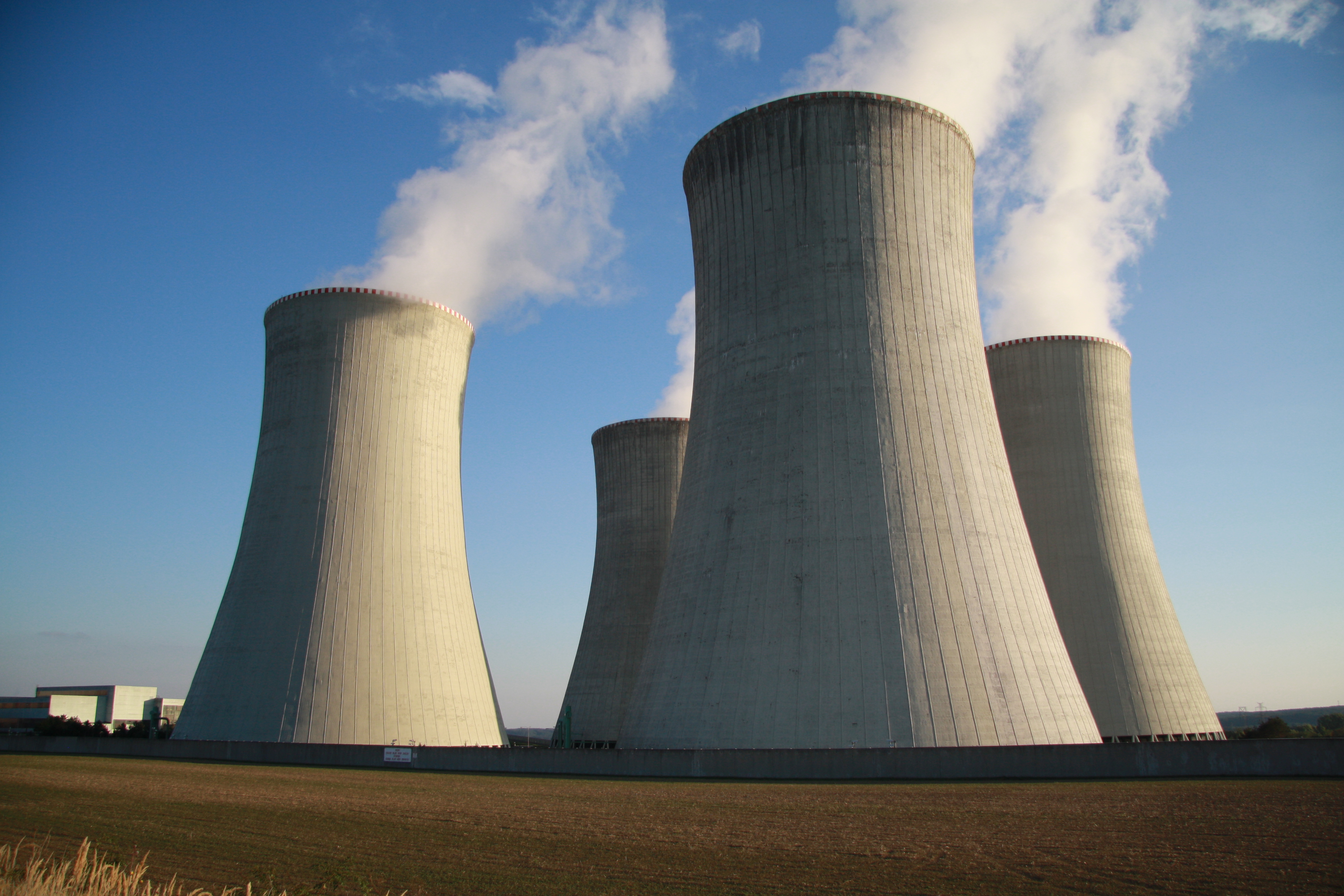
This is the founding thesis for the nuclear vertical at Clean Power Press.
Nuclear is having a moment, and the moment is more than hype. Power demand growth from AI data centers is real. Load growth in PJM, ERCOT, and MISO has reversed a decade of flat-to-declining forecasts. Firm, carbon-free, weather-independent generation is suddenly more valuable than it has been in 20 years. The NRC issued a construction permit for TerraPower’s Natrium advanced reactor in March 2026 — the first new US nuclear construction permit in more than a decade. Palisades Nuclear Power Plant, shut in 2022, secured a $491M DOE loan guarantee for restart and is targeting reconnection to the grid in 2025.
All of this is real. The question isn’t whether nuclear matters — it clearly does. The question is what the data says about when new nuclear capacity actually shows up on the grid, and what that means for investors making decisions in 2026.
The timeline problem
Nuclear’s appeal is its operating profile: high capacity factor (~93%), firm output regardless of weather, carbon-free, with long plant life (60+ years with license extensions). The problem is the distance between announcement and electrons.
Historical data on US nuclear construction:
- New greenfield plants. Vogtle 3 and 4 in Georgia are the canonical modern case. Initial construction license: 2012. Vogtle 3 online: 2023. Vogtle 4 online: 2024. 11–12 years from license to commercial operation. Cost: ~$35B against an initial estimate of ~$14B.
- First-of-a-kind advanced reactors. TerraPower’s Natrium received its NRC construction permit in March 2026. TerraPower’s target for first power: 2030. That’s a 4-year construction timeline for a project with significant DOE support — ambitious by any historical standard for first-of-kind nuclear.
- Small modular reactors (SMRs). NuScale’s 77 MWe design received NRC design approval in 2023 and is the furthest-along US SMR in regulatory process. No NuScale plant is under construction in the US as of mid-2026. The Carbon Free Power Project (CFPP) in Idaho was canceled in 2023 after cost projections exceeded $9B. First NuScale commercial plant outside the US: Romania, targeting mid-2030s.
Where the near-term thesis actually lives
If new greenfield builds are 10+ years away and SMRs are 2030+ at best, the near-term nuclear investment thesis lives in three places:
1. Brownfield restarts. Palisades is the template. A plant with existing NRC licensing, existing transmission interconnection, existing cooling infrastructure, and a trained local workforce base. The DOE loan guarantee removed the financing obstacle. Restart cost is a fraction of greenfield cost per kW. The grid benefit is immediate once operational. Duane Arnold (Iowa) and Kewaunee (Wisconsin) are other permanently closed plants that have been discussed as restart candidates, with varying degrees of seriousness.
2. Power uprates and license extensions. Every operating US reactor already represents a 60-year infrastructure investment. The NRC has approved license extensions to 80 years for several plants (Peach Bottom, Turkey Point, others are in process). Power uprates — increasing a plant’s authorized output without new construction — average 2–4% per plant per approval and aggregate meaningfully across the fleet. The 94 currently operating US reactors at average power uprates represent real capacity additions at near-zero marginal build cost.
3. AI-driven power purchase agreements. The Microsoft/Constellation deal to restart Three Mile Island Unit 1 (now operating as Crane Clean Energy Center) is the model: a hyperscaler with a large clean-power commitment purchases 100% of output from a recommissioned plant under a long-term PPA. The hyperscaler solves the financing problem; the plant owner gets offtake certainty; the grid gets firm capacity. This deal structure is replicable and several are reportedly in advanced discussion.
The AI demand driver is the real signal change
What’s different in 2025–2026 vs. 2015–2020 is not nuclear technology — it’s load growth. US electricity demand was essentially flat from 2007 to 2021. The AI data-center build is reversing that. PJM revised its 10-year load growth forecast up by 40% in 2024. ERCOT has added >15 GW of new large-load interconnection requests in 2025 alone, driven primarily by data centers.
Data centers want three things: large blocks of power (100 MW+), firm delivery (not weather-dependent), and clean (to meet corporate sustainability commitments). Nuclear satisfies all three. No other currently available technology does. This is why hyperscalers are signing 20-year PPAs for nuclear output at prices that would have seemed uneconomic five years ago.
What the SMR story actually means
Small modular reactors are real technology and real progress is happening. The NuScale design is NRC-approved. TerraPower’s Natrium uses a sodium-cooled fast reactor design with molten-salt thermal storage — genuinely novel architecture. Kairos Power, X-energy, and others have DOE funding.
But the “SMR solves the cost problem” thesis is not proven. The economies of mass production only kick in at scale; the first 10–20 SMRs will be expensive because they’re FOAK (first-of-a-kind). The learning curve that solar and wind rode down took two decades and hundreds of gigawatts of deployment. Nuclear’s learning curve, if it exists at a comparable slope, requires similar deployment volume.
The grid-scale impact of SMRs before 2032 is small. The investment thesis for SMRs is 2030s-and-beyond.
Positioning implications
- Uranium miners and converters benefit from any nuclear growth scenario. If capacity expands, fuel demand rises. If the fleet just extends operating life, demand per plant holds steady. Supply chain concentration (Kazakhstan, Russia, Uzbekistan) creates geopolitical risk that drives US and allied-nation uranium development.
- Nuclear services companies (Curtiss-Wright, BWX Technologies, Centrus) are exposed to both uprate work and new-build work without the construction-cost risk that greenfield projects carry.
- Constellation Energy has the largest US nuclear fleet and the Crane PPA template. Watch their PPA pipeline.
- Pure-play advanced reactor companies are venture/pre-revenue investments. The technology is real; the question is capital discipline and whether the 2030 timelines hold.
Risks to the thesis
- Brownfield restarts prove more expensive than projected. Palisades is the test case; if costs balloon, the restart thesis weakens.
- Construction cost overruns at TerraPower’s Natrium follow the Vogtle pattern. This would significantly delay the SMR learning curve.
- Power demand growth from AI data centers slows or redistributes geographically, reducing urgency for new firm capacity.
- Regulatory friction at the NRC, despite recent improvements, extends permitting timelines on new designs.
The frame: nuclear’s resurgence is structural, not cyclical, but the investment horizon is longer than headline coverage suggests. Brownfield, uprates, and uranium supply chain are the near-term plays. New-build is the 2030+ thesis.